
Bihać City Tour
Address
Bihać
GPS
44.810156877152, 15.873355865479
Level of difficulty 2 | Gastronomy 3 | Distance 4.7 km | Time 1 hour
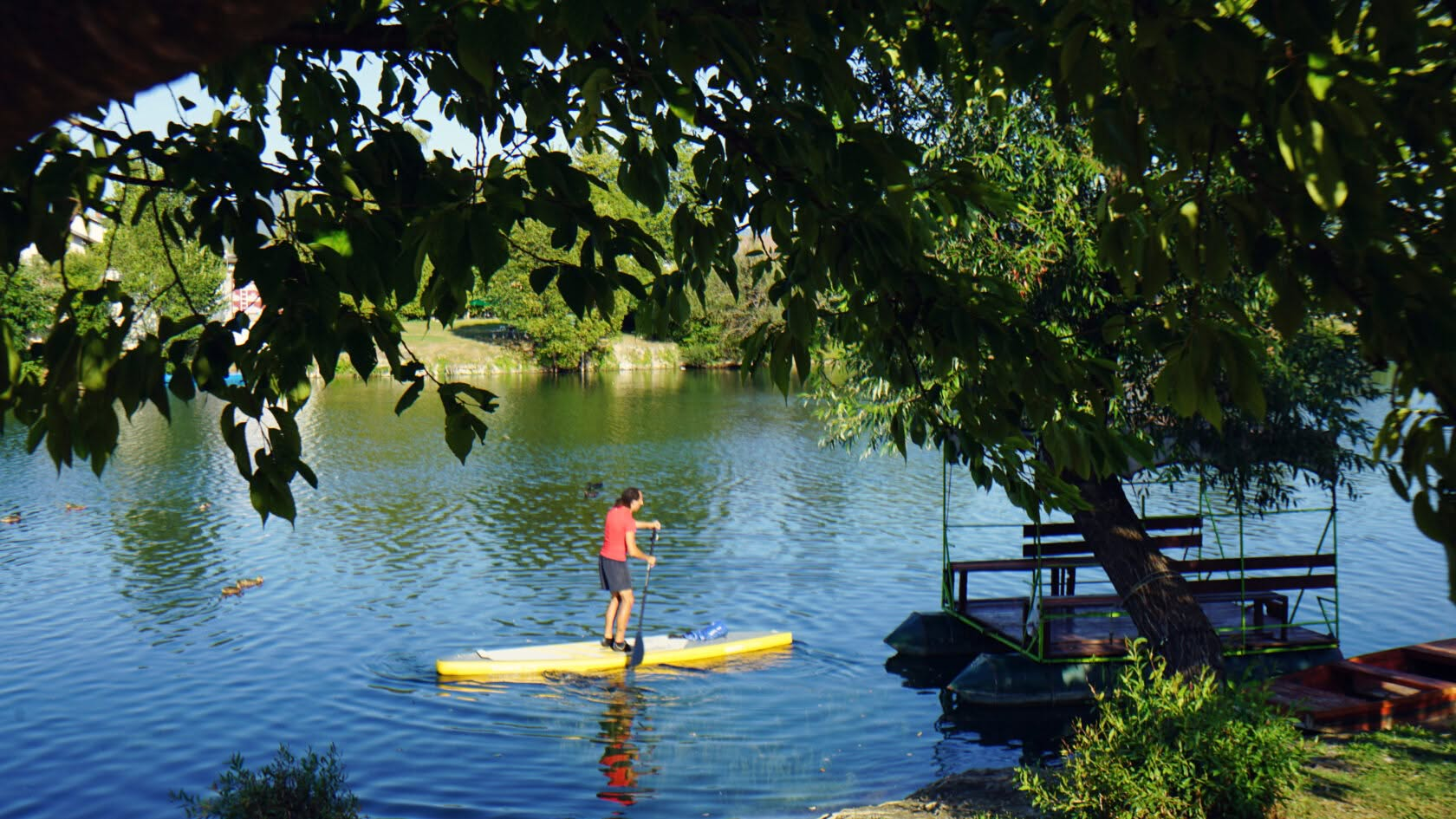
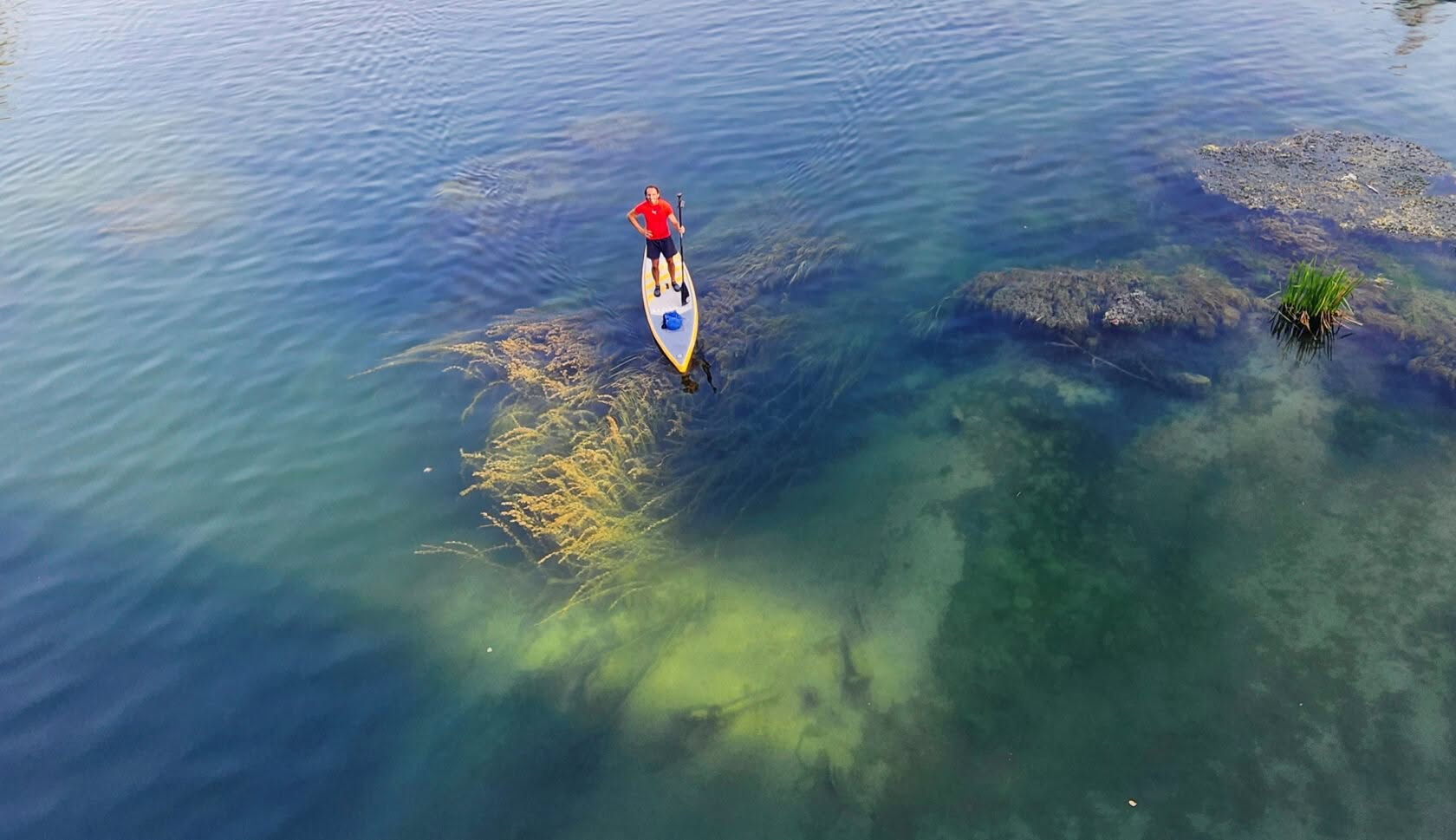
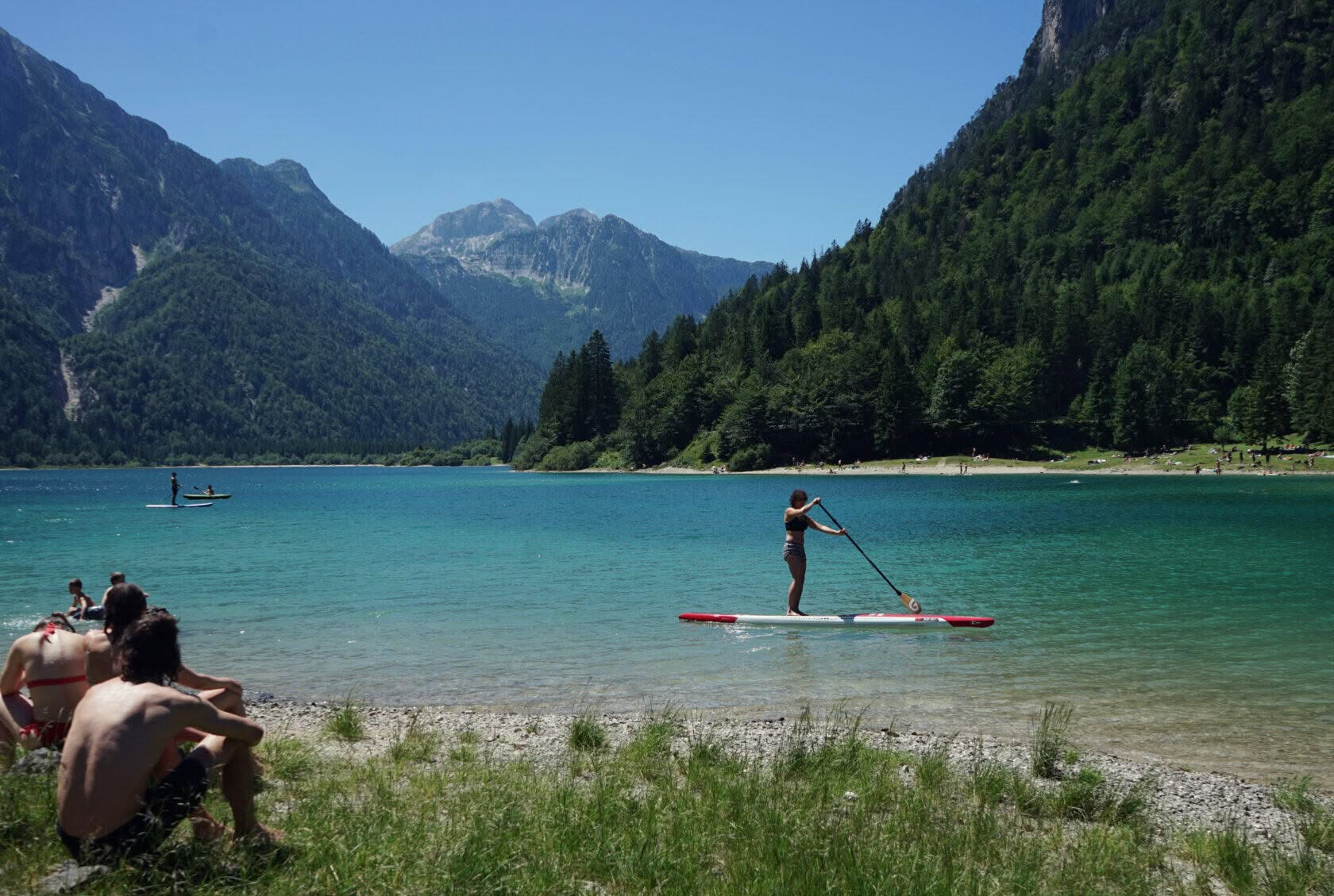
In summer, the Una’s pools become the social hub of the town. It’s all the more delightful that you can also explore them on your SUP.
General information
- Bihać Wikipedia
- Bihać tourist information
- Bosnia tourist information
- Tour video
- Climate
- Wind, waves, weather


Navigation rules
The river is popular among swimmers and it's a SUP hotspot. Commercial rowboats also operate here, and anglers love the river as well. The latter are usually out on the river in their boats. So paddle with caution, be considerate of all river enthusiasts, and give them plenty of room.
Avoid littering and do not trespass on private property.
There are also ducks and swans swimming everywhere. They, too, want to remain undisturbed in their habitat.
Likewise, in shallow areas, try to swim around the aquatic plants as best you can.
Dangers and risks
When inflating and setting up your board, make sure you're not in anyone's way or causing any inconvenience to others on the promenade or the lawn. It gets pretty busy by the water in summer.
The Una River flows almost at a standstill here for the most part, but it forms cascades up to half a meter high. You have to find suitable spots where you can either paddle over them — if the water level allows — or carry your SUP ashore for short distances to get around the cascades.
Expect a relatively strong current and choppy water directly below the small waterfalls.
Glide past the pillars of the bridges and footbridges, keeping a safe distance. In some places, you’ll also have to kneel or get down on all fours to paddle underneath.
However, after heavy rainfall and during the snowmelt, you should avoid the river due to flooding and the resulting current. In midsummer, the water level at the Hs Bihać monitoring station is usually at its lowest (around 25 cm), but from October through December and from February through May, it can reach up to 2 m — nearly eight times higher. In May 2023, for example, the water level reached up to 170 cm following a period of heavy rain, resulting in flooding. The immense power of this otherwise tranquil stretch of river was also evident in 2018.
In some places, the water is extremely shallow when the water level is about 25 cm. This is especially true for the areas around the Island Villa Hotel and a short distance upstream, in the middle of the basin in front of the small beach Odmor za dusu.
Sometimes people jump into the water from the bridges and footbridges. The main bridge is a particularly popular spot for this, so you should always keep an eye on what’s happening above you.
The mole Kupalište Beton is also very popular — people spread out their camping chairs and towels and jump into the cold water from there. It’s also long enough to find a good spot to dock and cross over.
We recommend taking a walk to explore the town's waterways beforehand to get a better sense of how to paddle (especially if you deviate from our suggested route).
If you plan to paddle past multiple waterfalls rather than staying in just one pool, you should wear neoprene shoes. The ground is rocky and sometimes slippery right around the waterfalls. The main island, Gradska otoka, is also steep and somewhat muddy on the approach and descent — so you’ll need to be sure-footed while holding your SUP.

Directions
The town is primarily accessible by car and by bus, whereas the trip from Croatia in the north, in particular, is relatively quick. Due to the mountainous terrain and the resulting lack of high-speed roads, the journey from all other directions can take longer — even from Bosnia itself. The town center is fairly compact, and once you’re here, you’ll find the launch site on the left bank of the river quite quickly.
Buses run daily from Sarajevo, Zagreb, and Split to Bihać. However, the frequency of service could be improved, so departure and arrival times may be inconvenient. You can find intercity bus routes on the comparison websites Omio and Busbud. All intercity and long-distance buses stop at the central bus station, from which it’s a one-kilometer walk to the launch site. If that’s too far for you, you can also take a taxi.
When it comes to train connections, things are even more complicated, since there are only regional trains stopping at the train station outside the town center. Among other things, there are no trains from Zagreb or Sarajevo to this small town.
The nearest airports are in Zagreb, Zadar or Banja Luka. From there, the best way to continue on to Bihać is by private car, bus, or rental car.
Parking
On hot summer days, there’s a lot going on along the Una River, and the parking lots get crowded as a result. If in doubt, you’ll just have to start your tour somewhere other than where described here. Downtown offers several low-cost parking lots near the water (as of 2026).
Odmor za dusu Beach (0,5 KM/hour)
Parking Centar (5 KM/hour)
Parking lot at launch site (1 KM/hour)
Swimming
Natural swimming spots along the Una River dominate the region, as public pools are rare. In Bihać the river is a popular swimming spot; in midsummer, the water temperature typically averages 17–20°C, and in calm areas it can sometimes be even slightly higher.
The most popular swimming spot in Bihać is Kupalište Beton, a long, flat concrete platform with easy access to the water and plenty of space for sunbathing. Other popular bathing areas include Kupalište Hatinac and several smaller beaches (called “plaža”). In addition, a public swimming pool is expected to be completed in 2027.
The river resembles a reservoir in most of the town's pools due to the slow current. However, please exercise caution near the small rapids and waterfalls, as these areas may have currents and turbulent water.

Tour
From the restaurant Čardak na Uni, paddle upstream to the first bends in the river. Then flow downstream back to the center, walk across the main island of Gradska otoka, and paddle back against the current.
Length
4.7 km
Time
1 hour
Start and landing
On the lawn in front of the restaurant Čardak na Uni.
SUP rental
None


Gleaming island labyrinth on bright-green terraces
There are many beautiful rivers in Bosnia, but the Una is definitely among the country’s finest. One reason for this is certainly the northern Bosnian town of Bihać, where this river — which originates in Croatia — forms unique cascades that are virtually unmatched elsewhere. The so-called Sedra — the travertine barriers in the middle of Bihać — were formed by the high calcium carbonate content of the water, which creates natural cascades and dams in the riverbed as the highly calcareous water loses CO₂ in shallow, turbulent areas and deposits calcium carbonate.
This creates terrace-like pools with shallow water, which is why the river has become a popular destination for relaxation and water sports. When I first heard about this town and saw the beautiful pictures of the emerald-green river, I immediately decided that one day I would come here to see this spectacle for myself.
From my hidden gem of a place to stay, the Nektar Park Villa Sarah, it’s just a few minutes’ drive to Bihać, and one of the best spots I can imagine for a great start to the tour is the area in front of the topmost cascade. Conveniently, there’s also a dirt-cheap parking lot (1 KM/hour — as of 2026) next to the meadow, where I’m just a stone’s throw away from the water.

After three weeks of scorching heat — including extremely warm bathwater — I can finally jump into cool water and enjoy the refreshing temperature of the Una. It’s probably only about half as warm as the air, which is undoubtedly why people of all ages — young and old — are jumping into the water, swimming, and playing.
At first, I’m drawn away from the hustle and bustle and the small waterfalls, and I paddle to the right to head upstream toward the first visible bends in the river. As I do so, I pass a large, crumbling building complex — what you might call a lost place in modern parlance.
It is one of the countless remnants of war in the town, which was besieged during the Bosnian War (1992–1995) and played a strategically important role. You can tell that this wasn’t all that long ago by the many dilapidated, run-down corners of this simple and charming little town. People here work honestly and with motivation; they are friendly and haven’t forgotten how to laugh after all those painful years. Yet many facades, corners, and neighborhoods here still reveal that there’s a dark side to recent history that’s not easy to come to terms with.


Construction on the vacant building began before the war. The war prevented the completion of this planned retirement home, and since then it has stood unfinished and dilapidated on the riverbank. Since the turn of the millennium, it has been unsuccessfully listed for sale and thus remains not only a symbol of the war but also of the authorities’ failure to complete this project despite decades of effort.
Meanwhile, generations of teenagers discovered the building for themselves and used it to throw parties. Music videos were also filmed there. All of that came to an end, however, as soon as the junkies found a suitable hideout in the buildung.
As I head towards the tranquil river bends south of the town, I try to block out the pieces of this past to let a smile cross my lips. Below me is deep, crystal-clear water revealing vibrant green carpets of vegetation, and above me is the pristine blue afternoon sky. A few older gentlemen are playing Cuban music and chatting on their private waterfront property while, ahead of my bow, ducks seem to be trying to show me the way.
My board takes me all the way to the first secluded bends in the river as I head out of town, where I get a taste of what it’s like on the quiet and gentle Una outside Bihać. The river is teeming with fish, home to about 30 different species. In addition to the rare huchen, otters, crayfish, turtles, and numerous bird species also live in and along the river. Is it any wonder, with such clear and mineral-rich mountain water?


I don’t paddle too far upstream, though, because a sense of joyful anticipation draws me back to the center, where the unique river terraces play out their fascinating spectacle. But first, I take a sip of the incredibly clear and clean water and can confirm what I’ve read about its excellent quality.
The natural cascades in town are all between about ten and fifty centimeters high and, at least at today’s water level (25 cm), are nearly impossible to navigate — as long as you have a fin attached to the bottom. That’s why many folding boats find their way here; even today, they glide quite smoothly over the edges of the cascades.
I, on the other hand, let the gentle current carry me to the mole first, because that’s a great spot to carry the SUP over to the other side. It’s especially busy today, as young people have gathered around the wooden diving board and are taking turns showing off their dives. With these calm water conditions, though, this happens all over the town center — you can even hear the thud of bodies hitting the water’s surface from the big car bridge. If you’re brave enough, you can easily jump five to six meters into the water here.
After crossing the bridge, it’s best to flow to the right around the main island, Gradska otoka, which has a nice park with a playground. In fact, there are nice play areas for kids all over the region, even though the financial situation could be better and there are other priorities as well.
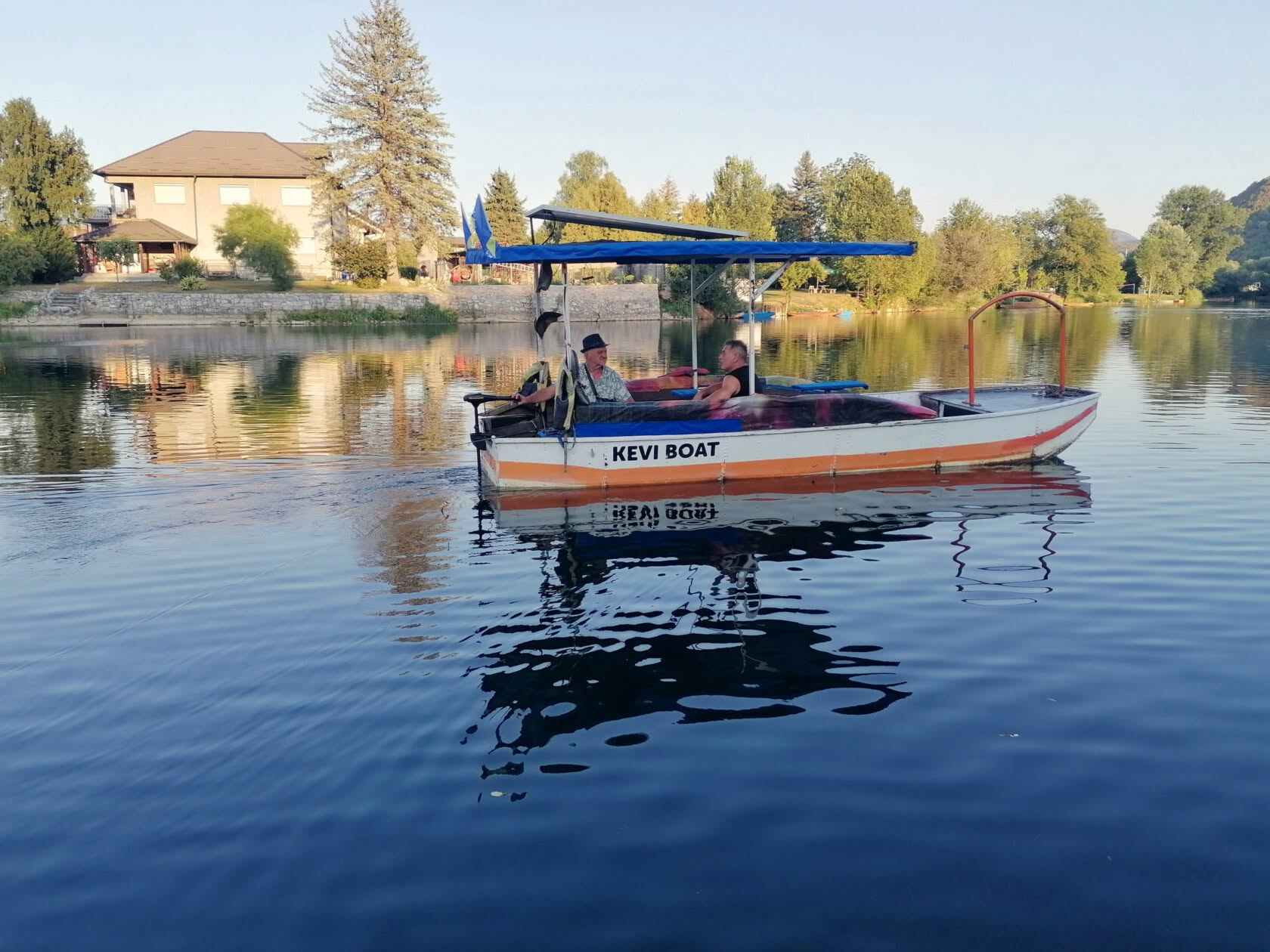
While vacationers and locals on the Gig Bar's terrace enjoy drinks and lively conversation until the sun begins to set, the experienced paddler knows to keep to the right here to avoid the next surge of water from the cascades. You can paddle quite close to the edges everywhere, but for safety’s sake, you should keep at least two meters away from the mini-waterfalls.
They look cute, but even here the water has considerable pulling power. The Bihać cascades, however, are just a miniature version of the large waterfalls and rapids further upstream that offer rafting fun and a raw, natural adventure.
You could probably even glide through the small rapid on your knees under the little wooden walkway between the parking lot and the small Plandiste Beach, but I prefer to pull up on the beach just before the rapid and carefully lift my SUP over the rocks into the shallow area on the other side.
My neoprene shoes are really coming in handy now, because the rocky ground is a bit slippery, and it wouldn't be very comfortable to walk barefoot over such terrain. The countless aquatic plants all around the pools are also a good reason to wear shoes.


The water is extremely shallow on the way to the Villa Island walkway. Here, as well as just past the dock, you have good footing — partly in the sand, but partly also on a plant-covered stone surface. The Villa is a small hotel that can be reached by car via a fairly narrow wooden boardwalk with no side walls or railings. While drivers have to navigate with pinpoint precision at the top, paddlers can pass through easily at the bottom.
The water here is practically at a standstill, and I have to paddle a bit to glide through the old wooden pilings. After that, I continue another 50 meters until I reach another threshold — this time a pretty high one. On the other side, I could flow comfortably down the river to Hatinac Beach with its long water slide, but with a heavy heart, I skip this northern part of the town's waterworld.
The rapid seems impassable from both sides, and it’s likely that turning back would be impossible elsewhere as well. So I make a U-turn and paddle back toward the main island, specifically to the large pool below it. People have set up camp on the islets. Towels, bags, and clothing hang from the trees and bushes, while their owners gaze meditatively at the river or simply relax in the water.
The soundcheck for a summer concert echoes toward me from the main island as I spot yet another wooden walkway. It leads from that island to the smaller island Mala Gradska otoka, and I guide my SUP underneath it. As I do so, though, I have to pay special attention to the mats of vegetation on the surface so I don’t get slowed down too much while I paddle back to the left toward the launch site.


My tour of the town is coming to an end, and from here, the only way to get back to my car is to stop at the footbridge on Gradska otok, walk across the island, and board my SUP again at the footbridge on the other side.
On both sides, the meadow is steep and rocky, meaning that getting on and off the path requires concentration and sure footing. After that, however, my route flows smoothly upstream to the mole and across to the other side until I reach the meadow by the parking lot again. Although I covered only a very short distance, the round trip took longer than expected. It’s worth stopping every now and then to watch the water and soak up the unique atmosphere.
If you haven’t had enough of this tour, you can, of course, also paddle along the northern reaches of the Una River within Bihać. As for me, I’m treating my family and myself to a great dinner at Pizzeria City, just a few minutes’ walk away. Here, you’ll find enthusiastic and attentive staff, fantastic Balkan-style grilled dishes, and prices that are almost embarrassingly low for Central Europeans.
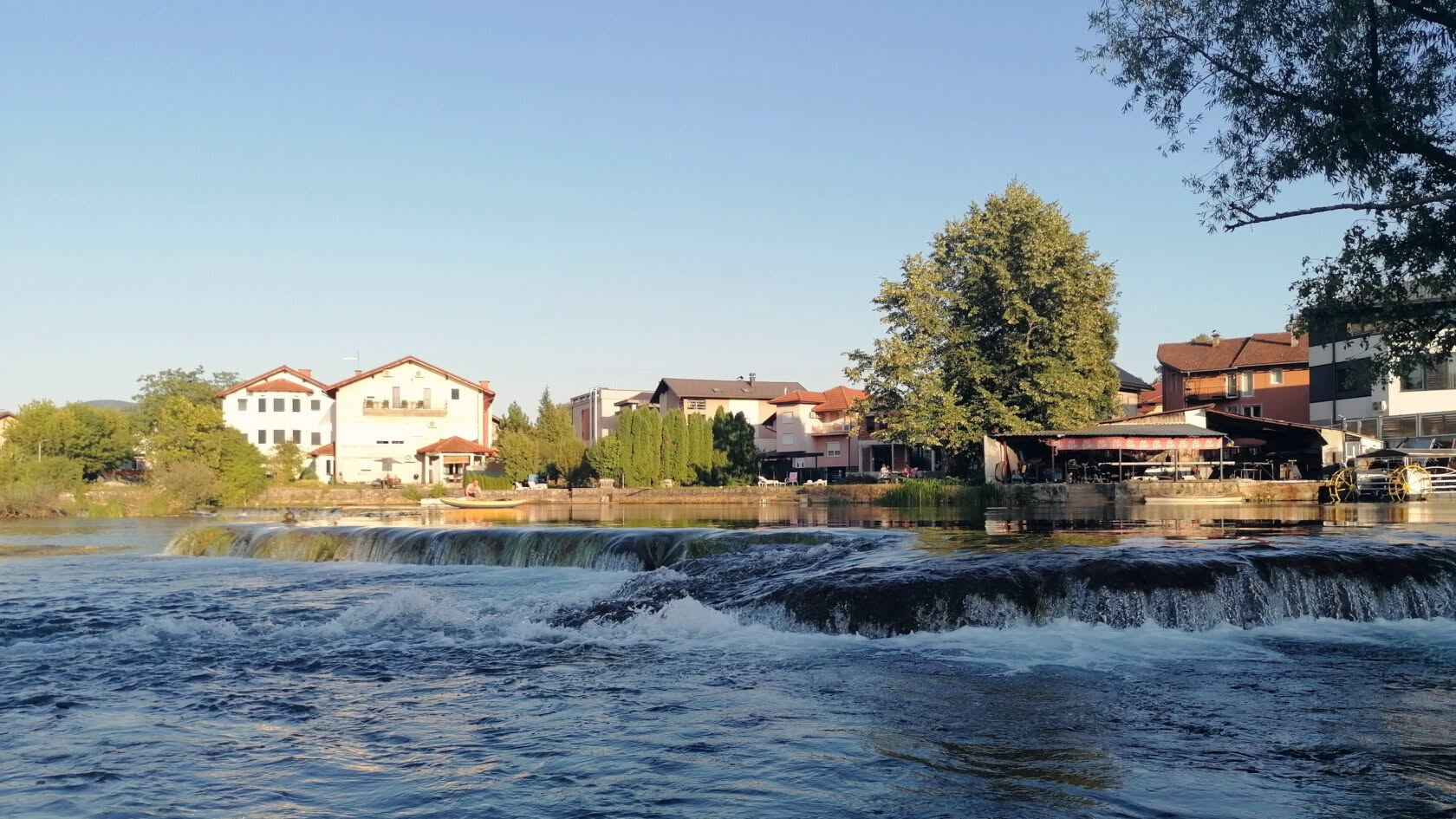
Alternatives: South of town — that is, upstream — the Una can be paddled in sections without rapids, almost like a reservoir, for several kilometers at a time. For example, around the lovely Japodski Otoci islands, or past them. Even within Bihać, there are other options for extremely short trips on the northern outskirts. Here, the waterfalls allow only short round trips of no more than 1–2 km.








Leave a Reply